

If you’ve tried making kofta at home and ended up with dry, dense, or bland results, you’re not alone. Many cooks want a dependable Indian meatball recipe that tastes like what they get in a great restaurant—soft, juicy centers, deep spice, and a silky gravy that clings to every bite.
This guide shows you how chefs build flavor and texture, step by step. It’s clear, practical, and tested against food-safety and flavor science, so you can cook with confidence. Ready to master kofta at home, the restaurant way? Keep reading.
What Makes A Meatball Dish Stand Out
Great restaurant-style meatballs are tender, well-seasoned, and consistent. The secrets are simple: choose the right grind, balance fat and moisture, handle spices the right way, and control heat.
We’ll walk through each part of kofta preparation so you can repeat the same success every time.
The Meat: Flavor, Fat, and Freshness
Kofta works with lamb, beef, chicken, or a blend. Aim for a medium grind with some fat for tenderness. If using lean meat, add moisture through a bread-and-milk paste (panade) and grated onion. This keeps the mix juicy without turning mushy.
A light but thorough mix helps the proteins bind so the meatballs hold together without becoming tight. Research shows salt helps extract myosin (a key muscle protein), which improves binding and texture—so season evenly before mixing.
Meat Ball Spices: How Chefs Build Depth
Kofta’s classic profile comes from cumin, coriander, black pepper, fennel, green chili, ginger, garlic, and garam masala. For restaurant-level aroma, toast whole spices briefly, then grind.
Toasting wakes volatile compounds and creates more complex flavors; blooming ground spices in hot oil spreads those flavors through the dish.
The Gravy Matters
A silky onion–tomato base (or a richer, nut-and-cream korma) carries spice and adds moisture. A short “bhunao” (cook-down) step deepens flavor and gives you that glossy restaurant finish. Add cream or yogurt at the end for a soft, balanced taste.
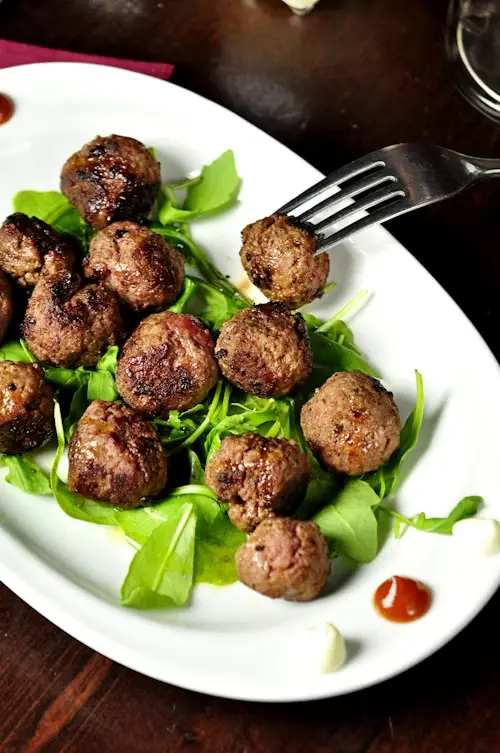
Cook to safe temps. Ground meat must hit 160°F (71°C) for safety (165°F / 74°C for poultry). A thermometer is the simplest way to get juicy restaurant-style meatballs without guesswork.
Common Mistakes We Avoid While Preparing Meat Balls
Here are common mistakes that we avoid while preparing the Indian meatballs:
Overmixing the Meat
Working the meat too much compacts the proteins and squeezes out moisture. Mix only until the blend looks uniform and slightly tacky. Oil your hands and use a light touch.
Underseasoning the Center
Season the mix, not just the gravy. Kofta should taste good even without sauce. Make a tiny test patty, cook it quickly, taste, and adjust before shaping the rest.
Skipping Spice Prep
Raw spices taste flat. A 60–90 second toast plus a 30–45 second bloom in oil gives you depth and that “restaurant” aroma with almost no extra effort.
Cooking Too Hot
A roaring boil toughens meat and splits the gravy. Keep a gentle simmer. Cover the pan to cook evenly.
Forgetting Food Safety
Kofta should be fully cooked through—especially with mixed meats. Verify with a thermometer (160°F / 71°C for red meats; 165°F / 74°C for poultry).
Meatball Variations That You Can Try At Korma Sutra
Here are some variations of Indian meatballs that you’ll end up loving:
Lamb Kofta in Creamy Korma
Swap tomato for a mild onion–nut base. Blend sautéed onions with cashews and a splash of cream. Keep spices warm and aromatic, not hot. This is a gentle, elegant version that still tastes rich.
Chicken Kofta with Yogurt
Use ground chicken and add an extra tablespoon of oil to the mix for tenderness. Finish gravy with yogurt instead of cream and a squeeze of lemon for lift. Cook chicken kofta to 165°F (74°C).
Beef Kofta with Smoky Chili
Use beef, keep the panade, and add a pinch of smoked paprika for a subtle smoky note. Finish with fresh cilantro and a drizzle of ghee.
Vegetarian “Kofta”
Use grated paneer or mashed chickpeas with grated zucchini (squeezed dry), breadcrumbs, and the same meatball spices. Pan-sear gently and simmer briefly in the sauce so they keep their shape.
Conclusion
With these steps, your Indian meatball recipe will deliver tender kofta, layered spice, and a glossy gravy every time. If you’d rather enjoy them without the prep—or want party trays, corporate orders, or a special dinner—Korma Sutra in Al Barsha would love to help.
:Reach us at info@ksdxb.com, call +971 58 509 7219, or contact us to plan your next meal.


