
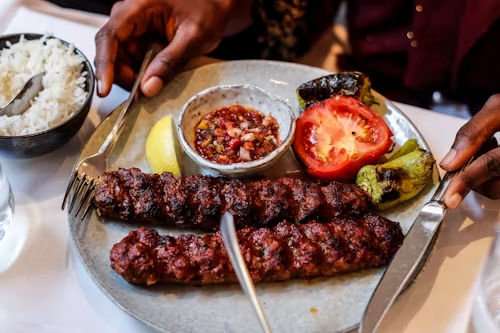
At Korma Sutra in Al Barsha, Dubai, we rely on time-tested kitchen discipline and clear food science to turn good kebabs into memorable ones. Below, we share the exact principles we use every day so you can understand the “why,” not just the “what.”
Keep reading to learn the kebab preparation secrets that make flavor last from first bite to last.
The Core Problem Marination Solves
Meat is mostly water and protein. Heat tightens those proteins, which can push out moisture and turn juicy meat tough. A smart marinade fixes two things at once: it seasons the meat deeply and helps it hold on to moisture.
The most important tool here is salt, because salt diffuses into meat and helps proteins retain water as they cook. This is the backbone of all effective spice marination—without enough salt, flavor stays at the surface.
Acid—used with care—adds gentle tenderization and bright flavor. But not all acids behave the same. Strong acids (like vinegar) can make the surface mushy if overused.
Gentle dairy acids (from yogurt) soften proteins without wrecking texture, which is why many classic kebab recipes rely on a yogurt base.
A marinade cannot “soak to the center” overnight, except for salt and very small molecules. That means we design our marinade to do two jobs: help salt move inward and pack the surface with big flavor.
For depth, we rely on salt and time. For surface fireworks, we rely on aromatic spices, browned over charcoal and flame. This balance yields a kebab that tastes complete—inside and out.
The Korma Sutra Approach to Kebab Marination Techniques
Our kitchen is busy, but our rules are simple. We start with good meat, we measure our seasoning, and we give the marinade time to work.
We also respect temperature: cold for marinating; high, clean heat for cooking. These steps are the same whether we are shaping seekh, threading tikka, or grilling chops.
Salt First, Always
We season early with a measured amount of salt so it can diffuse. Salt reduces how much muscle fibers squeeze out moisture during cooking.
It is the most reliable of all meat tenderizing tips because it works through well-understood diffusion and protein chemistry.
Yogurt for Gentle Tenderness
Our signature marinades use full-fat yogurt for a soft acidity (lactic acid). It loosens muscle proteins without harshness and helps spices cling. Research and kitchen testing both show yogurt marinades produce tender meat and hold moisture well, even with overnight marination.
Spice Marination That Blooms
We grind spices fresh (often cumin, coriander, black pepper, Kashmiri chili), and we “bloom” them—waking their oils in a touch of warm ghee or neutral oil—before whisking them into yogurt. This step stabilizes the aroma and helps even coating.
Natural-ingredient marinades have also been shown to improve flavor and juiciness while limiting off-flavors.
Meat Tenderizing Tips We Use
Strong technique beats guesswork. Here are the habits we hold to daily in our kitchen.
Choose the Right Cut
Choose cuts with balanced fat and connective tissue. For seekh kebabs, a fine mince with some fat (usually 15–20%) ensures binding and juiciness. For tikka, uniform cubes help with even cooking and even seasoning.
Measure Your Salt
As a baseline, 1.0–1.5% salt by weight of the meat is a good starting range. If your marinade is very wet, the low end is safer. This range gives diffusion time to work while protecting texture.
Make Acid Work for You
Yogurt’s lactic acid is kinder than vinegar’s acetic acid. It softens proteins and helps retain moisture. Studies on fermented dairy show improved tenderness and reduced hardness compared with non-marinated controls. This is why a yogurt base is standard in many kebab styles.
Keep It Cold and Safe
Always marinate under refrigeration, covered, and never reuse a raw marinade unless boiled. These rules are non-negotiable for food safety at home and in restaurants.
Spice Marination: Building Layers That Survive the Grill
Grilling adds smoke and char—both can mute delicate notes. We compensate by layering sturdy flavors that thrive in high heat.
Base Aromatics
Garlic and ginger are water-soluble and oil-soluble; blending them with yogurt and a little oil helps spread flavor evenly across the meat.
Warm Earthy Backbone
Cumin and coriander add warm, nutty depth. Kashmiri chili offers color and a mild heat that does not blow out the palate. These spices hold up to charring and stay vivid at the table. (Natural marinades can also improve color stability and water-holding capacity.)
Freshness at the Finish
A squeeze of lemon after grilling brightens heavy flavors. We season again, lightly, after the meat rests—just enough to wake the crust.
The Role of Oil: Carrier, Not Crutch
Oil helps fat-soluble spice compounds coat the meat and reduces moisture loss at the surface. We use just enough to help spices bloom and stick. Too much oil weakens contact with the grill and blocks browning. The goal is a lacquer, not a bath.
Overnight Marination – Doing It the Right Way
“Overnight” is not a magic word; it is a controlled window. We usually aim for 8–12 hours in the fridge for lamb tikka or chops; 4–8 hours for chicken tikka; and shorter times for delicate seafood.
The lactic acid in yogurt is gentle, which allows longer rests without mushiness, unlike stronger acid marinades. Label your container with start time and target cook time to stay consistent.
Our Step-by-Step Kebab Preparation Secrets
This is how we bring it all together in a busy service and how you can mirror the logic at home.
- Season with salt early. Work within 1.0–1.5% salt by weight of meat. Give the salt a 30–60-minute head start before other marinade parts if time allows. Serious Eats
- Bloom your spices. Warm a spoonful of ghee or neutral oil. Stir in ground cumin, coriander, and mild chili until fragrant. Let cool.
- Build the yogurt base. Whisk full-fat yogurt with the cooled spice oil, garlic, ginger, and a dash of lemon juice.
- Coat evenly. Use gloved hands to work the marinade into all surfaces. For seekh, mix until the mince gets tacky; for cubes, ensure each piece is fully covered.
- Hold cold, covered. Chill for the planned time. Do not exceed it for delicate meats. Keep raw and ready-to-eat foods separate.
- Grill hot. Use clean, high heat to set the crust fast, then finish to temp. Rest briefly; re-season lightly; add lemon and herbs.
Why Our Signature Kebabs Taste Perfect Every Single Time?
It is not one trick—it is a system. Salt for depth. Yogurt for gentle tenderization. Freshly ground spices for a bold aroma. Time and control for repeatable results. Science supports these choices, and thousands of services have refined them. If you want to taste the result rather than just read about it, come see us in Al Barsha.
Conclusion
Great kebabs are not an accident. They come from clear kebab marination techniques, measured salt, gentle dairy acids, smart spice marination, and just enough time—often an overnight marination—to let science work.
If you want to skip the learning curve and go straight to pleasure, visit Korma Sutra in Al Barsha for kebabs that honor both craft and flavor.
When you are ready to book or ask about catering, contact us, email info@ksdxb.com, or call +971 58 509 7219. We would be happy to host you.
Frequently Asked Questions
How long should I marinate chicken, lamb, or beef for kebabs?
For chicken tikka, 4–8 hours in the fridge works well. For lamb cubes or chops, overnight marination (8–12 hours) helps tenderness and flavor without going mushy when using a yogurt base. Beef varies by cut; start at 6–10 hours for tender cuts and longer for tougher ones. Always keep it cold and covered for safety.
Do marinades tenderize meat, or do they only add flavor?
Salt penetrates and helps meat hold moisture; gentle acids like lactic acid in yogurt can soften proteins. Larger flavor molecules mostly stay near the surface. So a good marinade both seasons deeply (via salt) and adds big surface flavor (via spices). For deeper change, time and cut choice still matter.
What are the best spices to use for kebab marination?
We favor cumin, coriander, and mild chili for warmth and color, with garlic and ginger for base aroma. These hold up to high heat and charcoal. Blooming spices in a little oil or ghee helps them spread and stick. Natural spice-based marinades can also boost color and juiciness.
Is it safe to reuse marinade as a sauce?
Yes, but only after boiling it hard to kill any bacteria from raw meat. Better yet, reserve a clean portion of the marinade before it touches raw meat and use that as your sauce. Keep everything refrigerated until grilling. These are standard food-safety rules.
Do enzymes like papaya or pineapple help with kebabs?
They can, in very small, controlled amounts. Enzymes such as papain and bromelain break down proteins quickly, which can tenderize—but too much leads to a pasty surface. For most kebabs, yogurt and time are safer and more forgiving; add enzymes only for very tough cuts.


